Tuesday, September 24, 2013

Cooking in my new kitchen

This is my third kitchen since I started this blog, and while it's admittedly smaller than the previous two, it's still a great kitchen in my mind:


Here are some meals I've cooked up in the new kitchen!

Inaugural meal (okay, the first meal we cooked the first night in the new apartment was just pasta with tomato sauce, because that's all we had in the house):


 Sicilian swordfish:

 
Drawing on the flavors we got to taste on our trip to Sicily earlier this summer, I pan-seared swordfish with fresh cherry tomatoes - red and yellow - onions, olives, capers, and herbs. The juicy tomatoes and briny olives and capers developed into a complex sauce that brought me back to the Italian island!

First dish I cooked in our new cephalon pan: pesto bulgur wheat with sauteed mushrooms, tomatoes, and fava beans, topped with shaved parmesan:


Okay I realize this looks like slop. Sometimes we joke that I should have a blog called "Vomit on a plate" since so much of the food we like to cook looks that way. But I swear it was delicious!

Fall is setting in and as usual I'm obsessed with squash. Here's my sauteed spaghetti squash with tomato basil mushroom sauce, salami, and shaved parmesan:


I used the fresh basil from my herb "garden" (potted plants on the windowsill ... that's city living for you.) More creative fall produce ideas to come!

Thursday, August 22, 2013

Beets!

I love beets. I realize that may seem a strange thing to love, but I really do. I learned to like beets pretty late in life, but now I've embraced them as an awesome addition to salads, roasted as a side, or, as I tried for the first time this summer: grilled.

Grilling beets was something I'd wanted to try for a while. It's pretty simple - you simply drizzle beets in a little olive oil, add some sea salt, wrap in aluminum foil, and place on the grill until they're tender. The most cumbersome part of the process is peeling the beets beforehand - I recommend using gloves (or in my case, putting my hand in a plastic bag) while peeling, otherwise you'll end up looking like something out of a slasher movie afterwards. We had our summer meal with grilled corn and beets out on the front porch:

I'd gotten a few pounds of beets from the farmer's market and we grilled them all, so there were leftovers. I sliced the remaining beets to use in a salad with mixed greens, walnuts, goat cheese, strawberries, and cherries:


Like glistening jewels. Then I was on such a beet kick that when I spotted golden beets at a market a few weeks later, I had to get those as well:


Golden beets have a milder, more mellow flavor than the red rubies, so the contrast of using both in a salad is very nice. For those who think they don't like beets - play around with them. Roast them, grill them, serve them warm or with cheese - I guarantee you'll soon realize that beets are a lot sweeter than you think!

Monday, July 8, 2013

Feasting in Abruzzo

Abruzzo is a region of central Italy, between Rome and the Adriatic. Though less famous to outsiders than Tuscany, Abruzzo is renowned among Italians for great wine and food. And my visit didn't disappoint.

My first dinner was in the wine cellar:


The main course of the meal was a typical dish of Abruzzo, scripelle, (like crepes filled with savory sauces) with a light zucchini filling:


Then I went to a wedding with ten courses of food all prepared by the chef of the Palazzo Baronale Masciarelli, so I was treated to dish after dish of the best of Abruzzo. First came the antipasti (appetizers):


Dozens of tarts, crostini, polpette, tartare, so many choices I lost count. After having wine and appetizers by the castle we went to the dining room for the sit-down dinner. The first course was a cauliflower cream soup with mini profiterol:


Next came the primi pasta courses - there were two! First the chitarra with a saffron-infused lemon sauce and edible flowers:


Followed by the lasagna with buffalo mozzarella, eggplant, tomato and basil:


The segundi meat courses were a lamb shoulder from the Maiella Park with wild thyme and almonds, and a beef fillet medallion with aromatic butter, served with fresh sauteed spinach and an aromatic salad.


After dinner came the buffet of fruit and desserts in the secret garden behind the castle:


Served with liquors and Prosecco, naturally. And to finish, the wedding cake of course!


Around two a.m. they had more food for the inebriated dancers: penne in a tomato sauce. By that point we had little room left to eat more...

The next morning (well, noon) there was a brunch outside for all the wedding guests, serving salumi, frittatas, and more cheese and meatballs:


And a wine tasting to sample the wines made from the vineyard on the castle property. Absolutely delicious! I had an incredible visit to Abruzzo, and the food was part of the experience: unpretentious, perfectly done, and unforgettable.

Tuesday, July 2, 2013

Gourmand in Greece

Greek food is hearty, delicious, and has had centuries to evolve to its modern-day niche in Mediterranean cuisine. My recent trip to Athens I made sure to sample all the classic Greek staples, and enjoyed everything I tried.

First I had to have spanikopita, the spinach-filled pastry that may be my favorite Greek dish:


Then souvlaki, grilled meat (I chose chicken) served in a pita with vegetables and sauces, and often fries:

This souvlaki was from Boutique, a nice cafe with gourmet souvlaki that's lighter than the (often greasy) typical street food. Souvlaki is to me the quintessential Greek meal after a long day in the sun.

I also tried dakos, a traditional Cretan salad with tomatoes and feta over bread:


And for breakfast the freddo-cappuccino:


While Italians typically don't serve iced coffee - ask for a cold cappuccino and they'd look at you like you're crazy - with the hot climate in Greece, thankfully Greeks have adopted a whole variety of incredible iced coffees. "Freddo" means cold in Italian, so the Greek "freddo-cappuccino" literally means cold cappuccino, and reflects what I consider to be a brilliant culinary adaptation.

Of course the most beautiful place to eat in Greece is by the sea:


The last night we had an assortment of mezzes (small plates) with ouzo, the classic Greek liquor, to sample lots of different dishes: dolmades (stuffed grape leaves), Greek salad (tomatoes, cucumber, and feta), tzatziki dip, and moussaka, a bubbling eggplant casserole baked traditionally in a clay pot. A fantastic culinary trip!

Friday, June 28, 2013

Dining in Tuscany

Tuscany is infamous for good food, and I've had some incredible meals during my stay there. The highlights for me have included fresh porcini salad with shaved parmesan, Tuscan fagioli bianchi (white beans) slow-cooked with sausage, pappa pomodoro (Florentine tomato-bread soup), and the best homemade lasagna I've ever had (made by la nonna - grandmother - of course.)

Dining in Tuscany is a slow experience, to enjoy the food and surroundings, and here were some wonderful meals:


A light evening supper of salumi antipasto (selection of meat and cheese), olive and tuna crostini, and arugula salad with salami, served with sparkling white wine. We ate outside on the terrace with stunning views of the Tuscan countryside at sunset.

Then there was the family feasting on weekends. We had a wonderful Saturday lunch in the Tuscan countryside, with family and long-time friends at their rustic country house in the hills. We dined outside under the cherry trees:


The antipasti was fresh melon with prosciutto, finocchiona (fennel sausage), roasted peppers, and an assortment of cheese. They used the table in the house to stage courses, all the plates prepped:


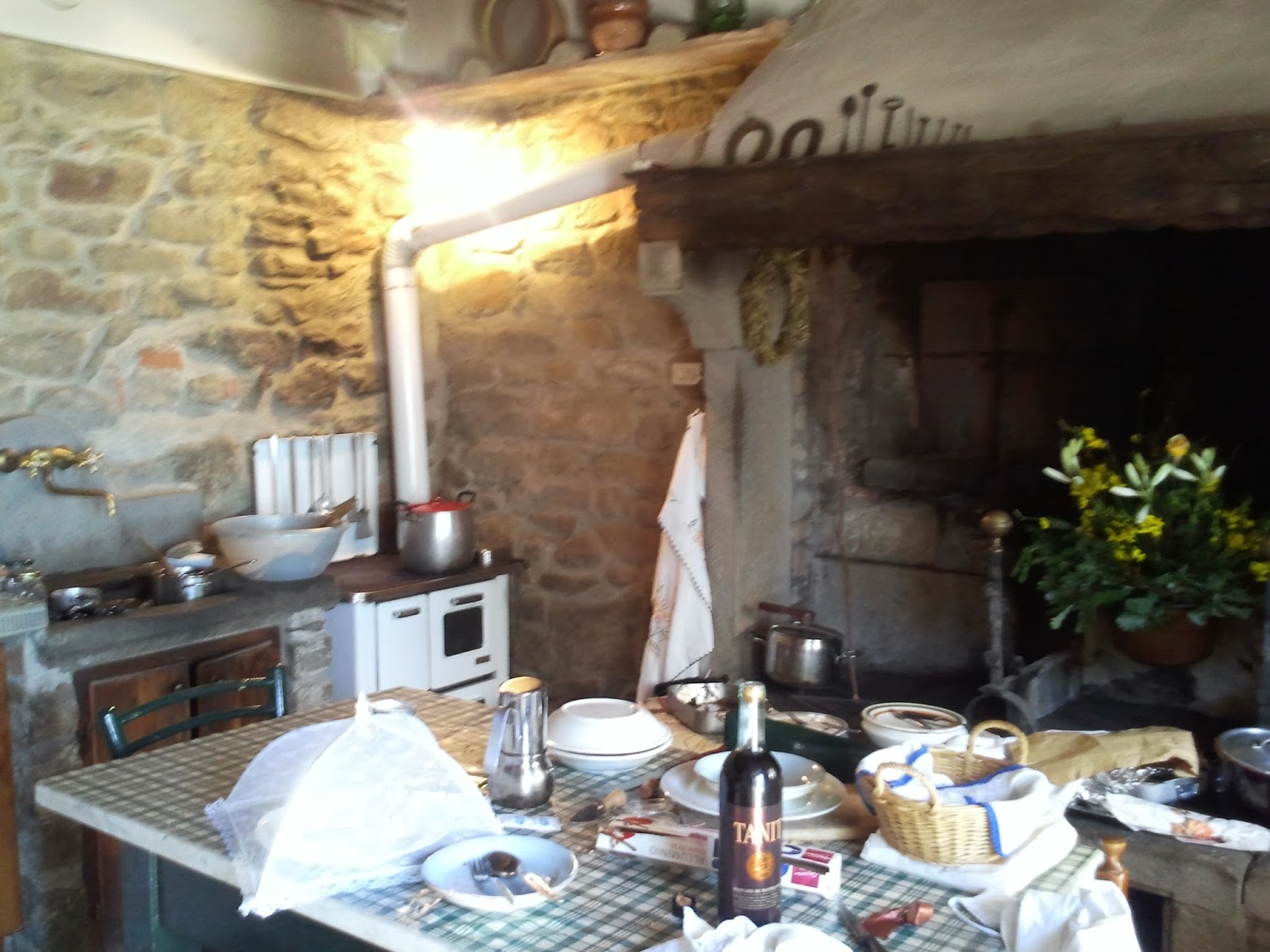
Next came the meat. First came the cacciagione - game meat - roasted birds (small wild birds similar to pidgeon or squab), cooked until crispy, their bones so thin you could eat them like crunchy chips. Then came slow-cooked fowl with sage, and tagliata, juicy steak cut into slides. Here's the cottage cucina (kitchen) where she cooked it all:


The contorni (side dishes) followed: chickpeas served with fresh olive oil they make on the property, salad of mixed greens dressed simply, and homemade bread made with walnuts. For dolci (dessert) we had homemade pannacotta drizzled with melted dark chocolate, and biscotti with Vin Santo sweet wine and grappa to finish.

This afternoon lunch took hours, to savor each dish and enjoy your fill of each course, and share good wine and conversation. No wonder Italians have espresso after meals - after eating so much food, you could easily fall asleep! It was an epic meal.

Wednesday, June 12, 2013

Italian Wedding

My first wedding in Italy was in Florence, with the reception at a Tuscan villa in Fiesole overlooking the city and the hills of Tuscany, so it's no surprise that the food was amazing as well. First came cocktails and appetizers, served by the pool in the grand backyard:


Drinks offered were white and red wine, Prosecco, and a cocktail made from fragole (fresh strawberries) and sparkling wine - light and refreshing. The bride and groom hand personalized labels on the wine bottles:


Then came the antipasto (appetizers.) A block of prosciutto, shaved to order, crostini with olive tapenade or anchovies, and fresh mozzarella served alongside a light tomato gelĂ©e in the shape of a rose:


Passed antipasto included fried zucchini flowers and sage, crispy golden and light and airy, you could eat a dozen, they were so good. Then came the dinner, served buffet style with an outdoor grill for meat made to order. For dinner guests sat, self seating, at tables on the terrace overlooking the city and hills beyond:

Bottles of red and white wine at each table, and floral centerpieces. For dinner the primi was ricotta gnocchi, soft light clouds, in a saffron cream sauce, and sauteed zucchini ribbons with oregano.


They also offered a Tuscan rice dish with eggplant, red peppers, peas, smothered in melted cheese. At the mixed grill they had spicy sausage (cooked rare the way the Florentines like their meat) and prime ribs on the bone. Dinner was a casual affair - eat as much as you want, whichever dishes you choose, and taking time to enjoy the meal.

Then came the cake: a classic Italian torta made from hundreds of pastries piled high and overflowing with whipped cream:

The cake was served with a strawberry sauce and fresh strawberries, and of course Prosecco. The dessert buffet also offered little cups of light mousse-cream topped with chocolate ganache, small chocolate espresso cakes (like Italian brownies on crack), candied orange peels dipped in dark chocolate, boxes of fresh cherries and strawberries, and candied marcona almonds (also in the parting favors.) Espresso was made to order to enjoy with dessert, or more wine if desired. Naturally I sampled every dessert offered and it was all incredibly good, the perfect conclusion to a fantastic Italian meal. The first of my Italian wedding experiences, it was a night I'll never forget.

Monday, June 10, 2013

Learning to Cook Like an Italian

What better place to learn to cook real Italian food than Tuscany? I've lived with an Italian man for three years now, and over time have learned a lot about Italian cooking: always use the freshest in-season ingredients, letting them be the focus of the meal; good olive oil is the key to great-tasting food; and recipes are always guidelines rather than exact instructions. Much of Italian cooking must be learned rather than taught: there is a wealth of infinite knowledge to be learned from observing the Italian cook in the kitchen that is rarely expressed in formal cookbooks.

Sunday lunch in Italy is a sacred occasion, a grand family meal of many courses. So last week's Sunday lunch was my tutorial on the Italian classic zuppa di mare - soup of the sea. Here's what I learned:

1) Begin by prepping the seafood. Soak the vongole (clams) in a bowl of water, cut the polpo (octopus) and raw fish into manageable cooking pieces, and clean the cozze (mussels) - that part's the worst, in my opinion. Cleaning mussels took nearly an hour, there were so many. The kitchen was filled with raw seafood piled in the sink and bowls on every surface: the bounty of the sea, literally.

2) Chop the vegetables. Onions, more garlic than you think could possibly be necessary, carrots and celery - I was set to work on chopping vegetables, and then fresh parsley (there were three different kinds, some leaves half the size of my hands. Parsley in Italy is on a whole other level.) The base to the zuppa (soup) was of course onions, garlic, and tomatoes, simmering slowly to develop the flavor.


3) The first course was stuffed mussels. Garlic sauteed in oil in a pan on the stove, then crushed tomatoes, making a classic marinara sauce. Then they whisked a raw egg into the tomato sauce to thicken it, tempering the egg in a glass bowl with the warm marinara and combining. When the tomato-egg sauce mixture came together to the right consistency, it was then spooned into each raw mussel and tied with string to bake in the oven for 10-15 minutes.


The mussels came out of the oven bubbling hot, with the tomato filling lightly crusting the edges of the mussel shells, enveloping the savory mussel meat inside. We peeled the string off the shells, prying the shells open with spoons to devour the exquisite insides.

4) Next course: classic steamed mussels and clams with garlic, parsley and a splash of wine. Simple, to the point, and eaten with bread and fresh homemade garlic aioli, which could knock you out with one whiff of the pungent raw garlic aroma.


 5) Meanwhile, the zuppa was simmering away. After the vegetables went in the polpo (octopus) and white fish, then more clams and mussels, then finally topped with gamberoni and scampi (shrimp of all sizes), the lid on tight to infuse the seafood with the aromatics' flavor. The zuppa was served right out of the pot:

The broth was ladled over a piece of crusty toasted bread placed in the bottom of each bowl, to sop up the juices, and topped with the steaming hot seafood piled high:


The savory tomato broth and perfectly cooked seafood and fish was so flavorful, the taste of the sea infused in every bite. At the bottom was the broth-soaked bread, the dessert at the end of the seafood symphony. We enjoyed the meal with Tuscan wine of course, and finished with espresso and grappa. Cooking like an Italian also means you get to eat like an Italian: course after course of delicious homemade food, enjoying time together at the table as a family. It's the way to live life, I think - enjoy every moment.