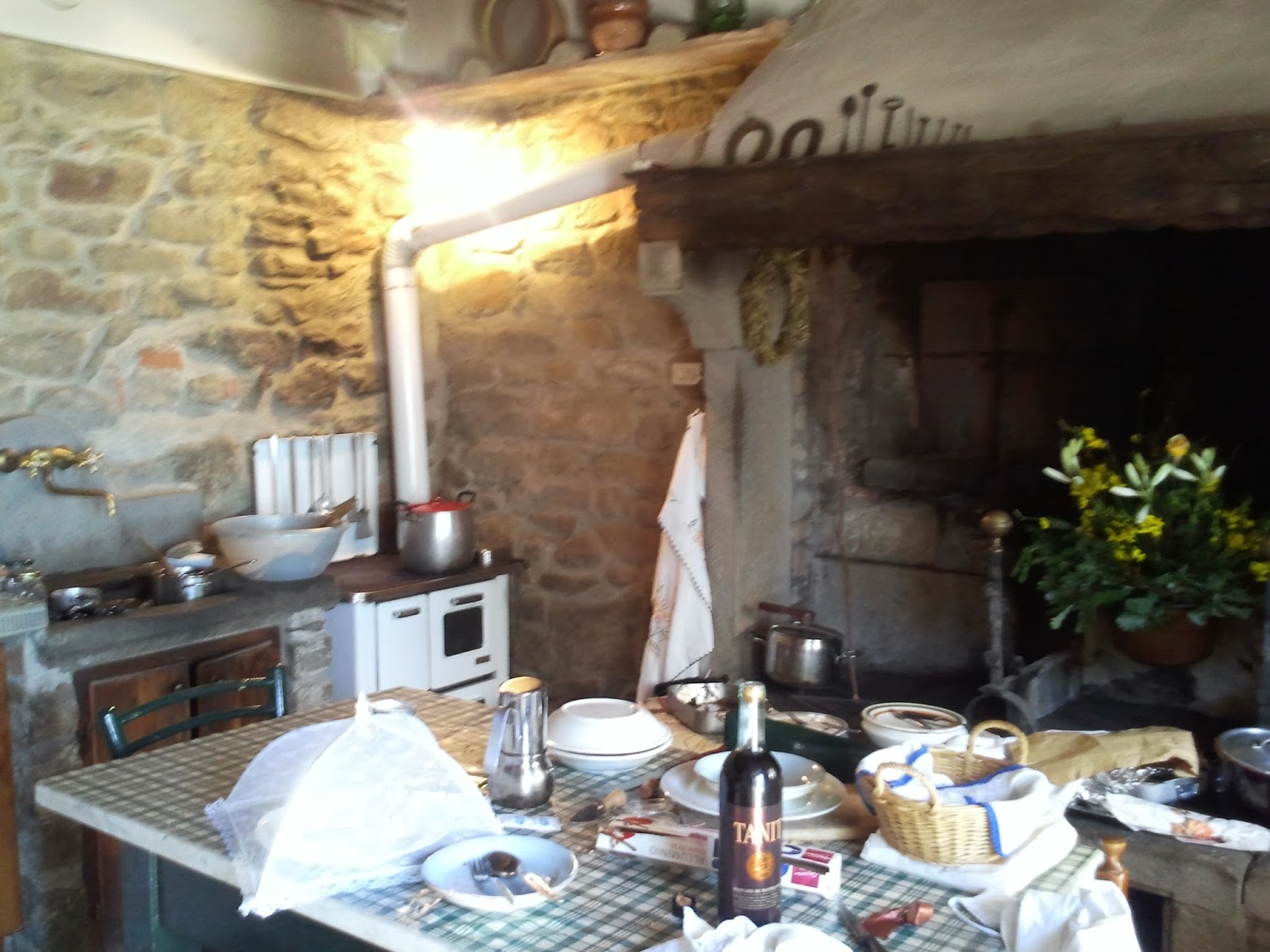
Italy is a country steeped in rich culinary traditions that span generations of home cooks. But it's key to understanding "how to cook Italian food" that cuisines vary drastically by region. The typical dishes local to each geographic area are often driven by the ingredients available, and shaped by the region's history. (Remember that for centuries the Italian peninsula was broken up into many city states, and only became unified in recent history.) Italian cooking traditions are strong, with loyalty to certain dishes and recipes almost or equally as powerful as soccer loyalties. Here are a few of the Italian regions I've been to, and the food that I ate:
1) Tuscany: Meat, Meat, and more Meat
This is the part of Italy nearest and dearest to my heart, since my partner is from Florence, and his family from the Chianti region of the Tuscan countryside (such a terrible place to go visit my in laws, I know.) Tuscan food is a tradition from years of necessity, many typical Tuscan dishes descending from peasant's food that utilized what was available, rather than elegant. For example pappa pomodoro, tomato bread soup, and ribollita, came from peasants repurposing stale old bread, adding what leftover vegetables they had around, and creating soups from them. This food is hardly pretentious, but it is delicious. Here are some dishes I had in Tuscany on my most recent visit.
Let's start with Tuscan meat. Traditional peasants' dishes lampredotto and tripa (yes, that's tripe) use the animal innards, stewed in savory broth, until palatable. (Well that's still debatable, but it's classic street food there.)

Butchery at the Firenze Mercato Centrale (central market), which has been recently renovated:

We took a day trip to the Tuscan countryside and stopped to have lunch in Greve, the sister city to Rehoboth Beach, Delaware, where my family has a beach house (see post on Rehoboth dining). There is a famous macelleria (butcher) there:


1) Tuscany: Meat, Meat, and more Meat
This is the part of Italy nearest and dearest to my heart, since my partner is from Florence, and his family from the Chianti region of the Tuscan countryside (such a terrible place to go visit my in laws, I know.) Tuscan food is a tradition from years of necessity, many typical Tuscan dishes descending from peasant's food that utilized what was available, rather than elegant. For example pappa pomodoro, tomato bread soup, and ribollita, came from peasants repurposing stale old bread, adding what leftover vegetables they had around, and creating soups from them. This food is hardly pretentious, but it is delicious. Here are some dishes I had in Tuscany on my most recent visit.
Let's start with Tuscan meat. Traditional peasants' dishes lampredotto and tripa (yes, that's tripe) use the animal innards, stewed in savory broth, until palatable. (Well that's still debatable, but it's classic street food there.)
Butchery at the Firenze Mercato Centrale (central market), which has been recently renovated:
We took a day trip to the Tuscan countryside and stopped to have lunch in Greve, the sister city to Rehoboth Beach, Delaware, where my family has a beach house (see post on Rehoboth dining). There is a famous macelleria (butcher) there:
Among the meats we tried was the soppressata, a type of salami:

But the best was the steak tartare:
I used to be a vegetarian, but that raw meat was drool-worthy.
Tuscan food is very simple, with minimal seasoning and quality ingredients. In addition to the variety of interesting meat that Tuscan cuisine has to offer, are the incredible pastries:
Breakfast of champions, in my opinion.
2) Umbria: Truffle Country
The region of Umbria, landlocked in the interior of the continent between Tuscany the Marche, has the perfect climate for growing truffles. We stopped at a hilltop village in Umbria and sampled some local cheeses crusted with earthy truffles:
Cheese selection with jam and honey: lunch for two.
3) Marche: Seafood Fare
The region of Marche, on the coast of the Adriatic (directly opposite Tuscany) is most famous for seafood in its cuisine. Fresh fish, prawns, you name it, Le Marche is all about the frutti di mare:
We had dinner at a tiny hole-in-the-wall trattoria that served only the day's catch:
Pasta typical of the region, with mussels and clams.
Fresh fish, grilled with lemon.
And of course, like all parts of Italy that I've been to, Le Marche had delicious gelato!
Adorable gelateria in Urbino.
Another region of Italy famous for seafood is of course Veneto. But one of the things that struck me the most about Venice, aside from the delicious pasta, were the markets filled with fresh produce:
Whether in Lazio (where Rome is), or Campania (on the Bay of Naples), fresh, local fruits and vegetables were to be found everywhere!